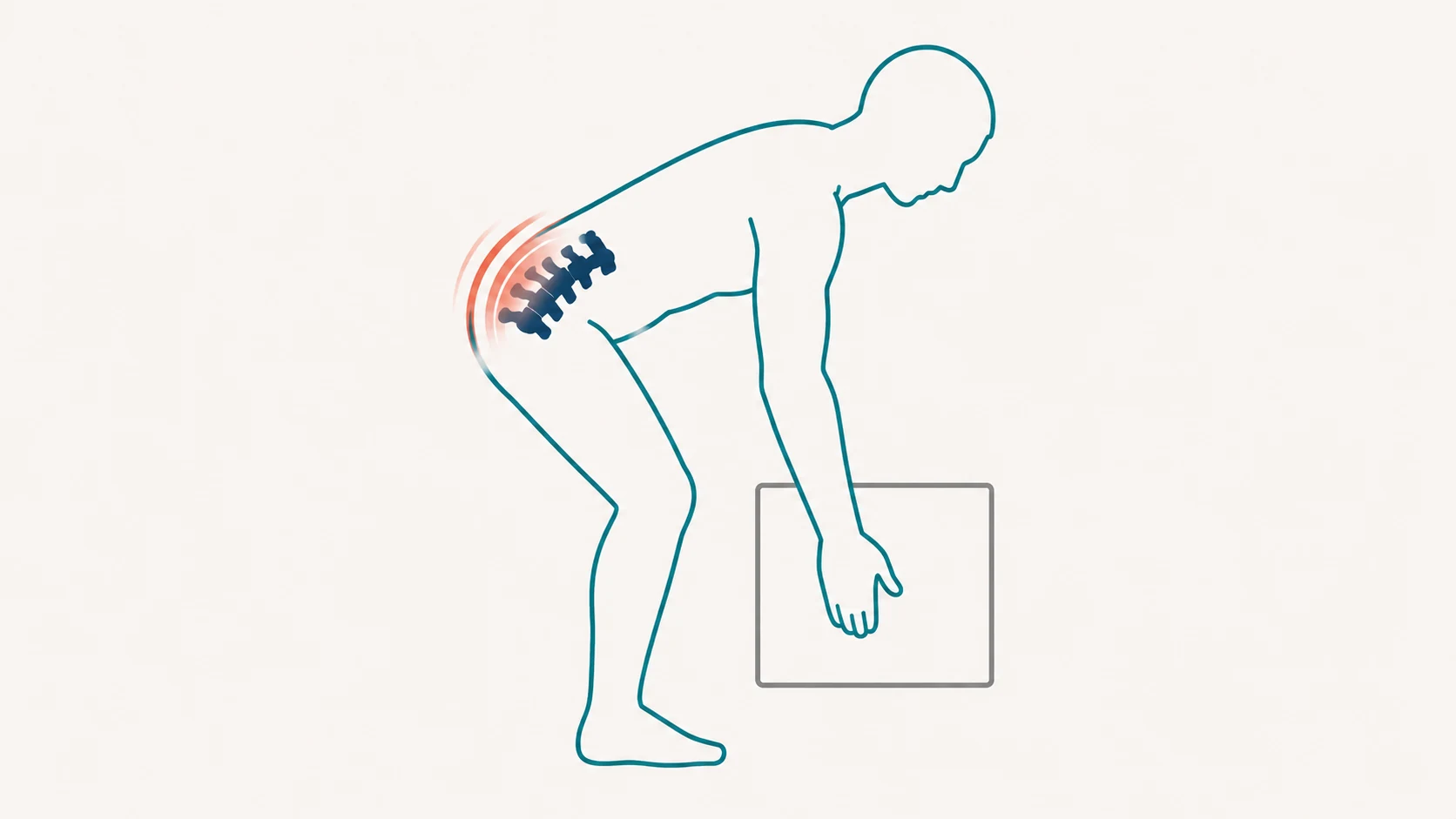
Lifting and movement are common culprits. A single wrong lift, repeated lifting at work, lifting while twisted, or lifting fatigue at the end of a shift can all strain the low back. The muscles and ligaments around the spine are strong but not indestructible, and they respond poorly to sudden loads or repeated stress in awkward positions.
Prolonged sitting is just as damaging. Desk work, long drives, and the gradual loss of hip and core function from too many hours in a chair all load the low back in ways it was not built for. The hip flexors tighten, the glutes weaken, and the lumbar spine ends up doing work the hips and core should be sharing. Posture patterns add to it: forward-rounded shoulders, low-back overarching, and the way the body compensates for old injuries or imbalances all shift load to areas that eventually complain.
Repetitive strain from gardening, shoveling, painting, or anything that asks the same motion of the back over hours or days also stacks up. And age and wear play a role: the discs and joints change over time, and that is normal, but it sometimes shows up as new pain in your forties, fifties, and beyond. The slow build is the most common story: most back pain is not one event. It is the accumulation of small strains until the back finally announces itself.
Sometimes, though, back pain has a more specific cause that needs a careful exam — a disc, a nerve, an inflammatory issue — and finding the real driver is the difference between temporary relief and lasting recovery.