
Sciatica & Nerve Pain

Sciatica After a Car Accident

Sharp pain that travels from your lower back into the buttock and down a leg after a crash usually points to sciatic nerve irritation, most often from a disc injury or piriformis spasm. Early evaluation and conservative care resolve most cases without surgery.

  • Sciatic-specific orthopedic and neurological exam
  • Treatment plan targeting the source, disc, joint, or muscle
  • Nerve-glide and rehabilitation exercises
  • Documentation tied to the accident
  • Same-day appointments for accident patients

Please do not submit any protected health information (PHI) in this form.

By submitting, you agree to be contacted about your appointment. We respect your privacy.

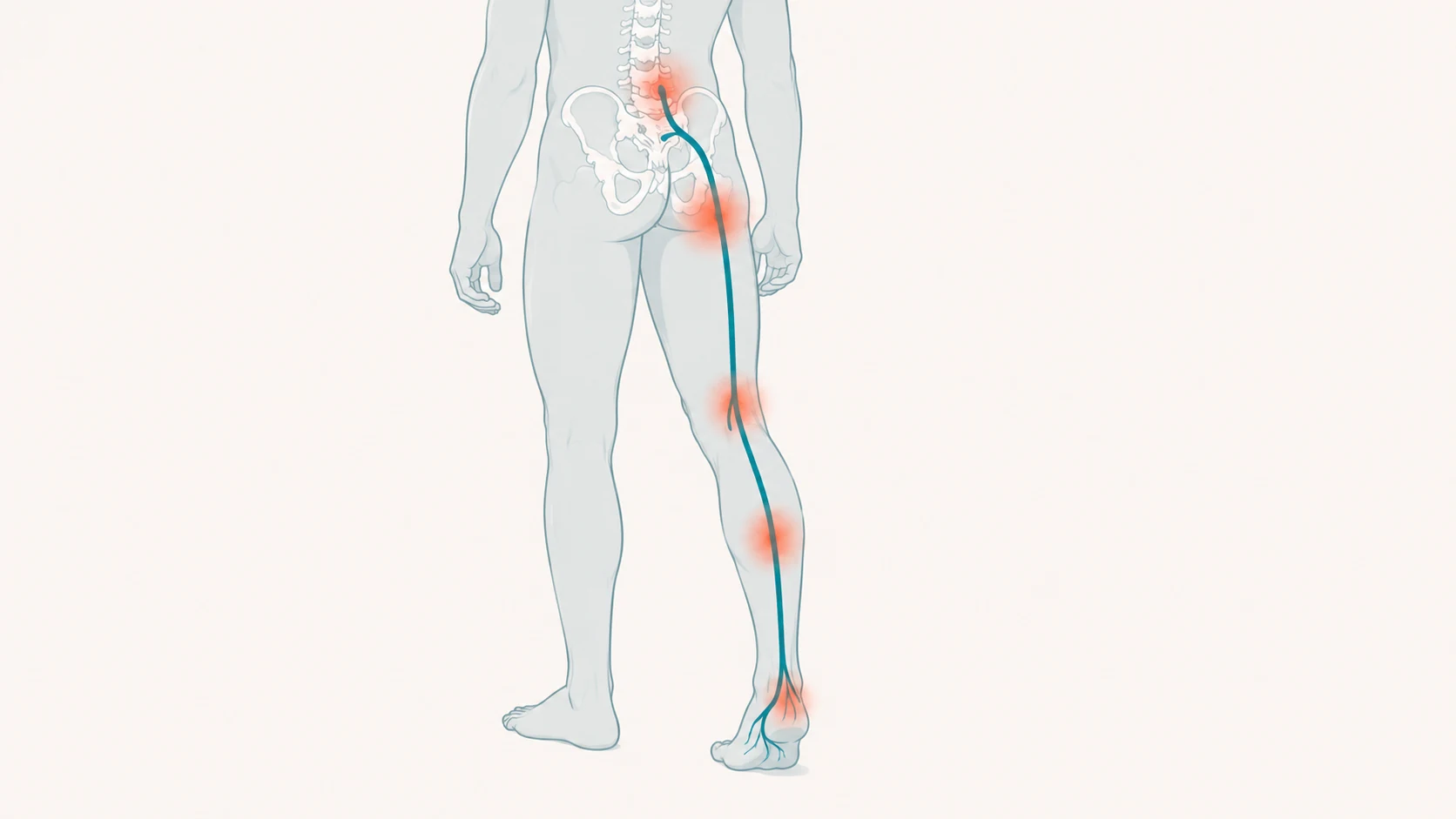
Illustration of the sciatic nerve pathway down the leg

Burning down the back of the leg? That is sciatica, and crashes are one of its most common causes.

Pressure on the sciatic nerve from a disc or an irritated lower back sends pain, tingling, or burning down the leg. Most crash-related cases resolve with conservative care when treatment starts early. Call (740) 453-2900.

What sciatica feels like in plain terms

Most people do not walk in saying "I have sciatica." They describe what they feel, and it usually sounds like one of these:

  • Tingling or pins and needles down the back of the leg
  • Numbness in the leg, foot, or toes
  • Burning or shooting pain that runs from the lower back into the buttock and down the leg
  • A leg that feels weak or heavy
  • Pain that gets worse when you sit, cough, or sneeze

After a crash, these symptoms often come from a disc in the lower back pressing on a nerve. You can read more on our disc injury page. If this sounds like what you are feeling, it is worth getting evaluated as part of our auto accident care. We screen for these symptoms, document them, and refer you to a physician when needed. Because sciatica almost always starts in the lumbar spine, our everyday low back pain care page covers the non-crash patterns that can leave a nerve irritated as well.

Medical emergency

Loss of bladder or bowel control, or numbness around the groin, is a medical emergency. Go to the nearest emergency room.

Common symptoms

Symptoms can show up right away or develop days later. If you notice any of these, get evaluated.

  • Sharp or burning pain shooting down one leg
  • Numbness or tingling in the calf, foot, or specific toes
  • Weakness lifting the foot, ankle, or big toe
  • Pain that worsens with sitting, coughing, or sneezing
  • Low back pain that came on within days of the crash

How we treat it

Treatment plans are personalized. Here are common approaches we use for sciatica.
  • Lumbar exam with straight-leg raise and dermatome testing
  • Gentle, hands-on chiropractic care
  • Gentle adjustments away from the involved level
  • Nerve-glide and core stabilization rehab
  • MRI referral when symptoms warrant

Trauma to the spine, including car accidents, can injure the tissue around the nerve roots. NINDS covers this in their overview of low back pain.

Why early evaluation matters

Sciatic nerve compression that lingers can produce lasting weakness or numbness. Most crash-related sciatica resolves with conservative care when treatment starts in the first few weeks.
People Also Ask

Questions patients ask us most

Can a car accident cause sciatica?

Yes. A car accident is one of the most common traumatic causes of sciatica. The crash forces typically bulge or herniate a lower lumbar disc (L4-L5 or L5-S1), and the displaced disc material presses on the sciatic nerve root, sending pain, numbness, or tingling down the leg. The seatbelt and pelvic rotation during the crash can also irritate the piriformis muscle, which compresses the sciatic nerve as it passes through the buttock.

How long does sciatica last after a car accident?

Most post-accident sciatica resolves within 6 to 12 weeks of conservative chiropractic care, including nerve-glide exercises and core rehab. Mild cases improve in 2 to 4 weeks. Severe disc herniations can take 12 to 16 weeks, and roughly 90 percent of cases resolve without surgery when treatment starts early.

What does sciatica feel like after a car accident?

Crash-related sciatica feels like a sharp, electric, or burning pain that starts in the lower back or buttock and travels down the back of one leg, often past the knee and sometimes into the foot. It is usually one-sided, worse with sitting, coughing, sneezing, or bending forward, and may include numbness, tingling, or weakness in a specific area of the leg or foot.

Can a chiropractor fix sciatica from a car accident?

Yes, chiropractic care is one of the first-line treatments for sciatica caused by a car accident. Treatment combines gentle adjustments away from the involved level, soft-tissue work on the piriformis and lumbar muscles, and progressive nerve-glide and core stabilization exercises. Most patients see measurable improvement within the first 2 to 4 weeks.

FAQ

Frequently Asked Questions

Quick answers about accident care, documentation, and what happens after you call.

What's the difference between sciatica and general leg pain?

Sciatica follows the sciatic nerve path, buttock, back of thigh, calf, sometimes into the foot, and usually maps to a specific dermatome. General leg pain from muscle strain or hip injury stays localized and does not follow a nerve pattern. The exam distinguishes the two.

Should I keep walking with sciatica?

Yes, in most cases. Gentle walking and prescribed nerve-glide exercises usually help sciatica recover faster than rest. Stop activities that sharply worsen the leg pain and report them at your next visit so the plan can be adjusted.

Are steroid injections necessary for sciatica from a car accident?

Not typically as a first step. Conservative care, gentle adjustments, nerve-glides, and core rehab resolves most cases within 6 to 12 weeks. Epidural steroid injections are considered when severe pain doesn't respond to 4 to 6 weeks of conservative care.

When is sciatica an emergency?

Seek emergency care immediately for loss of bowel or bladder control, numbness in the groin or inner thighs (saddle anesthesia), or rapidly progressing leg weakness. These can signal cauda equina syndrome and require urgent surgical evaluation.

Why does my leg tingle or go numb after a car accident?

After a crash, a disc or an irritated nerve in your lower back can send symptoms down the leg, causing tingling, numbness, or burning. That radiating pattern from the back into the leg is what people call sciatica.

Can a car accident cause sciatica?

Yes. The force of a crash can injure or irritate the lower back and the nerves that run into the leg, producing sciatica symptoms, sometimes even when your back itself does not hurt much.

Why does the pain shoot down my leg when I sit, cough, or sneeze?

Pressure on the nerve can increase with certain movements and positions, which is why sitting, coughing, or sneezing can make the shooting pain temporarily worse.

Free Guide

The Muskingum County Accident Recovery Guide

What to do in the first 72 hours, the 3 AI prompts every accident victim should ask, and the questions to ask before you sign anything. Free, no spam.

Related injuries we treat: disc injury and back pain. We see accident patients from Zanesville, Crooksville, Norwich, and Nashport. Same-day appointments and walk-ins welcome.

New to these terms? See our personal injury glossary.

Were you hurt in a car accident?

Get evaluated quickly. Get clear documentation. Start treatment today.