

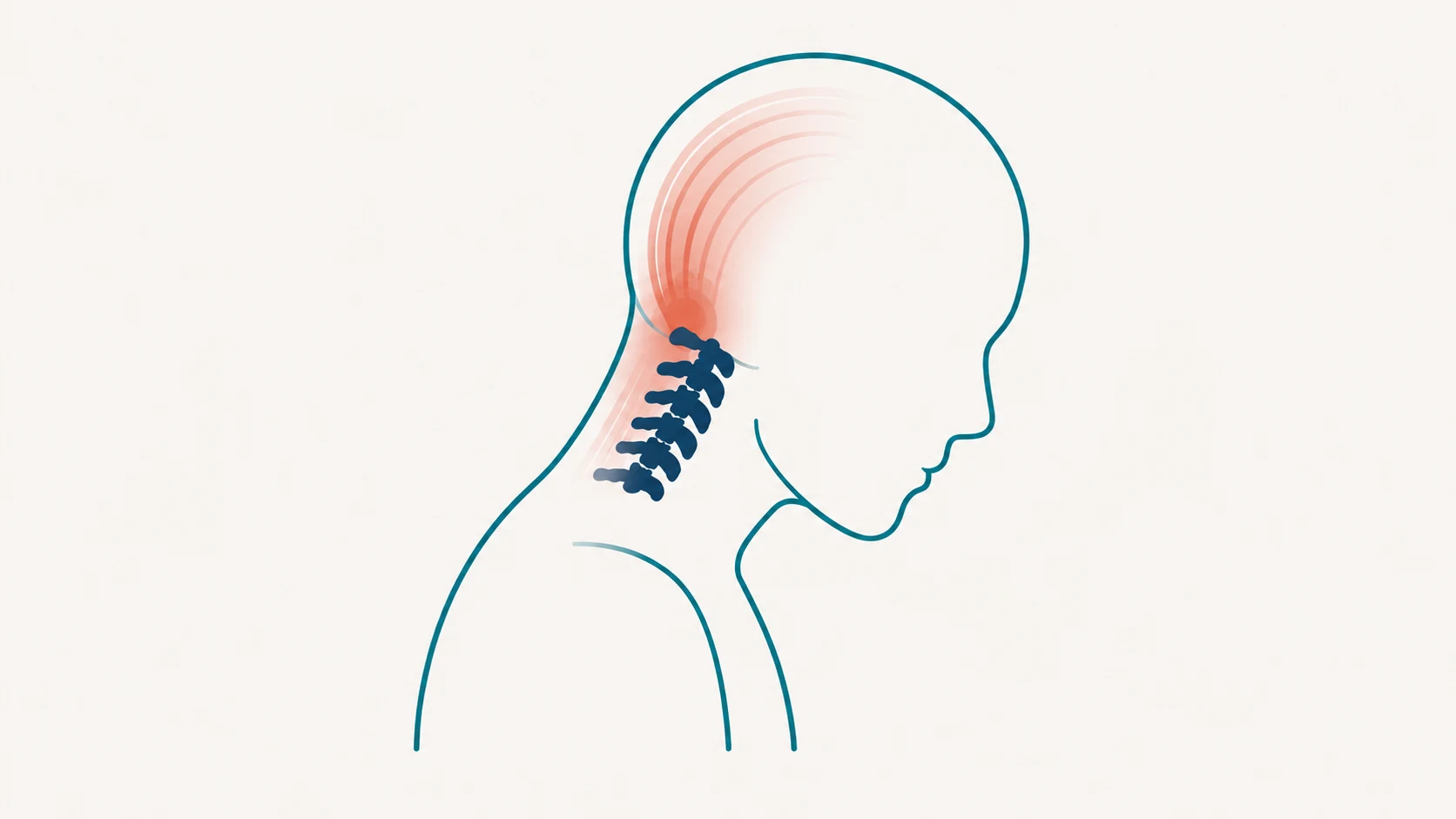
Tension-type headaches are the most common kind. Tight muscles in the upper neck and shoulders refer pain into the head, usually felt as a band of dull pressure on both sides. They build slowly through the day and are tied to sustained posture, stress, and fatigue more than any single trigger.
Cervicogenic headaches actually originate in the upper cervical spine. The joints and muscles at the base of the skull refer pain forward into the head, usually on one side, often worse with certain neck movements or positions. These respond well to focused work on the upper neck, which is why our neck pain and headache cases often overlap.
Posture and screen patterns drive a huge share of the rest: forward head position, prolonged sitting, and the slow strain of looking down at a phone or screen for hours. Stress and clenching add to it — jaw clenching, shoulder shrugging, and the way stress concentrates in the upper trapezius and refers up into the head. And sleep patterns matter more than people expect: pillow height, sleep position, and waking with the headache already in place all point to the upper neck being loaded for hours overnight.
Note: Migraines are a different condition from tension and cervicogenic headaches. They involve different physiology and often need different care. A real exam helps tell the difference, and we are honest about which patterns chiropractic helps with and which patterns need a medical doctor.