
Back Pain

Back Pain After a Car Accident

Back pain after a crash can range from a dull ache to a sharp, limiting pain. We evaluate the source, muscles, joints, or discs, and build a plan to help you recover.

  • Focused lower and upper back evaluation
  • Treatment plans tailored to crash-related injuries
  • Clear records for your own files
  • Attorney coordination when appropriate
  • Same-day appointments for accident patients

Please do not submit any protected health information (PHI) in this form.

By submitting, you agree to be contacted about your appointment. We respect your privacy.

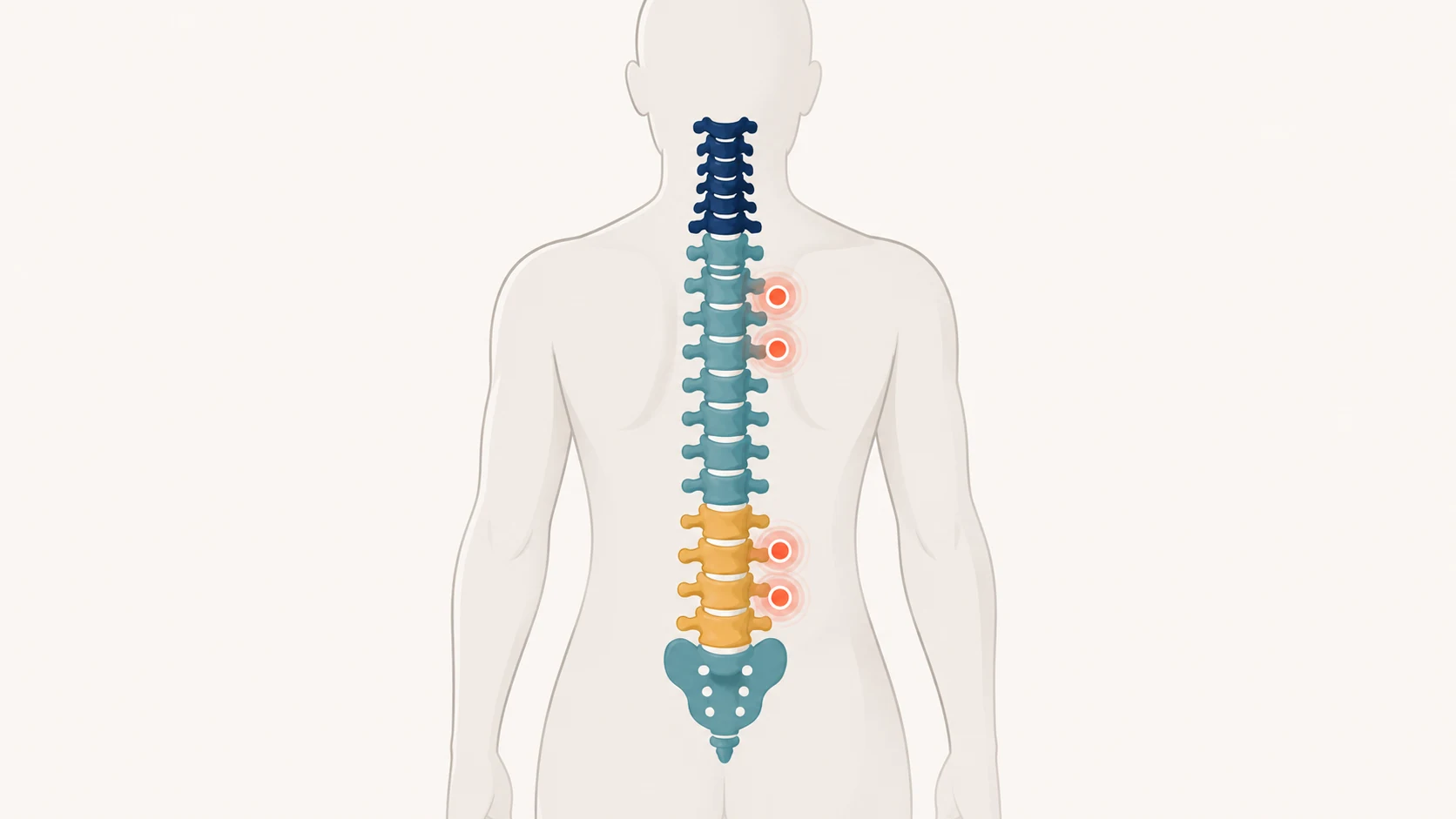
Illustration of the spine showing cervical, thoracic, and lumbar regions

Low back, mid back, upper back. Where it hurts tells the story.

The lower back takes the most force in most crashes. Mid-back pain often comes from the seatbelt and the twist of impact. Both deserve a focused exam, careful documentation, and a plan. Call (740) 453-2900.

Common symptoms

Symptoms can show up right away or develop days later. If you notice any of these, get evaluated.

  • Lower back pain or stiffness
  • Pain that radiates into the hips or legs
  • Muscle spasms
  • Trouble standing or sitting for long
  • Pain when bending or twisting
Headaches aren't the only thing that can show up late. Read our full breakdown of delayed pain after a car accident. For a general overview, Cleveland Clinic's back pain guide covers common causes and treatment options.

How we treat it

Treatment plans are personalized. Here are common approaches we use for back injuries.
  • Spinal adjustments and mobilization
  • Soft tissue therapy
  • Core and stability rehab
  • Activity guidance
  • Imaging referrals when needed

Why early evaluation matters

Untreated back injuries can become chronic. Starting care early usually means fewer flare-ups and a faster return to normal activity.
People Also Ask

Questions patients ask us most

Why does my lower back hurt after a car accident?

Lower back pain after a car accident is usually caused by the sudden compression and twisting force on the lumbar spine, which strains paraspinal muscles, irritates facet joints, and can bulge or herniate a disc. The seatbelt also pins the pelvis while the torso rotates, creating shearing stress through the sacroiliac joint. Pain often appears 24 to 48 hours later as inflammation peaks.

How long does back pain last after a car accident?

Most uncomplicated lower back strains from a car accident improve within 4 to 6 weeks of chiropractic care. Back pain involving a disc bulge, sciatic nerve irritation, or facet joint injury commonly takes 8 to 12 weeks. Pain lasting longer than 3 months is considered chronic, the strongest predictor of chronic back pain is delayed treatment.

Should I see a chiropractor or medical doctor for back pain after a crash?

For musculoskeletal back pain after a car accident, a chiropractor is typically the right first stop, they focus on the mechanical injuries crashes cause and can refer for imaging or to a medical doctor if red flags appear. Go to an ER first if you have loss of bowel or bladder control, progressive leg weakness, severe abdominal pain, or numbness in the groin area.

What is the fastest way to recover from back pain after a car accident?

Start chiropractic evaluation within the first week, alternate ice (first 72 hours) and heat (after), avoid prolonged sitting and bed rest, walk gently several times a day, and follow your prescribed rehab exercises. Combining spinal adjustments, soft-tissue therapy, and progressive core stabilization recovers function faster than rest or medication alone, according to current low-back-pain clinical guidelines.

Low back, mid back, and upper back: where it hurts tells a story

After a crash, "back pain" can mean very different things depending on where it is, and people usually describe it by location:

  • Low back pain (the lumbar area). The most common after a crash. It can be a deep ache, stiffness, or pain that flares when you bend, lift, stand up, or climb out of a car. If it travels down a leg with tingling or numbness, that can point to a nerve, which we cover on our sciatica and disc injury pages.
  • Mid back pain (the thoracic area). Pain between or below the shoulder blades, often from the seatbelt or the twisting force of the impact. It can hurt to take a deep breath or to twist.
  • Upper back and shoulder-area pain. Tightness and pain across the upper back and into the neck and shoulders, common when the crash jolted your head and torso.

Wherever it is, back pain after a crash is worth getting evaluated by an accident injury chiropractor in Zanesville, because soft-tissue injuries often feel mild at first and stiffen up over the next few days. We examine, document, and treat what is within our scope, and refer you to a physician when the exam calls for it. For back pain that is not crash-related, see our everyday back pain care.

Get prompt medical care

if you have severe mid-back pain after a hard crash, numbness or weakness in your legs, or trouble controlling your bladder or bowels.

FAQ

Frequently Asked Questions

Quick answers about accident care, documentation, and what happens after you call.

Is back pain after a low-speed crash actually possible?

Yes. Studies show meaningful spinal injury can occur in collisions as low as 5 to 10 mph because the body absorbs the deceleration force regardless of vehicle damage. Visible damage to the car is a poor predictor of injury to the spine.

Should I rest in bed if my back hurts after the accident?

No, prolonged bed rest actually slows recovery from acute low back pain. Current clinical guidelines recommend gentle walking, short position changes, and avoiding prolonged sitting. A structured rehab plan returns you to normal activity faster than rest.

What's the best sleeping position for post-accident back pain?

Side-sleeping with a pillow between your knees keeps the lumbar spine neutral. Back-sleepers can place a pillow under the knees. Avoid stomach sleeping, which extends the lower back and can worsen disc and facet pain.

Can post-accident back pain lead to chronic problems?

It can, especially when treatment is delayed past the first few weeks. The strongest predictor of chronic low back pain is how the acute phase was managed. Early, active care, not rest and painkillers, is the most reliable way to avoid a chronic pattern.

Why does my lower back hurt after a car accident?

The force of a crash can strain the muscles, ligaments, and discs of the lower back. Lower back pain is the most common back complaint after an accident, and it often stiffens up a day or two later as inflammation sets in.

What does pain between my shoulder blades after a crash mean?

Mid-back pain, often from the seatbelt or the twisting of the impact, can come from the muscles and joints of the thoracic spine. It can hurt to breathe deeply or twist, and it is worth getting evaluated.

Why did my back pain get worse a few days after the accident?

Adrenaline can mask injuries at the scene, and soft-tissue inflammation often peaks over the following days. Back pain that shows up or worsens later is common and should be checked.

My lower back pain goes down my leg. What does that mean?

Pain that radiates from the lower back into the leg, often with tingling or numbness, can be a sign of nerve involvement, sometimes called sciatica.

Free Guide

The Muskingum County Accident Recovery Guide

What to do in the first 72 hours, the 3 AI prompts every accident victim should ask, and the questions to ask before you sign anything. Free, no spam.

Related injuries we treat: disc injuries, sciatica, neck pain, and chest and rib pain. We see accident patients from Zanesville, Dresden, Frazeysburg, and Philo. Same-day appointments and walk-ins welcome.

New to these terms? See our personal injury glossary.

Were you hurt in a car accident?

Get evaluated quickly. Get clear documentation. Start treatment today.