Car accident insurance in Ohio: common payment paths
After a crash, healthcare and insurance questions arrive at the same time, but they are not the same decision. The medical question is what care is appropriate. The insurance question is which policy or payment arrangement may cover the bill. This page explains common terms so you know what to ask the insurer and the clinic before assuming anything is covered.
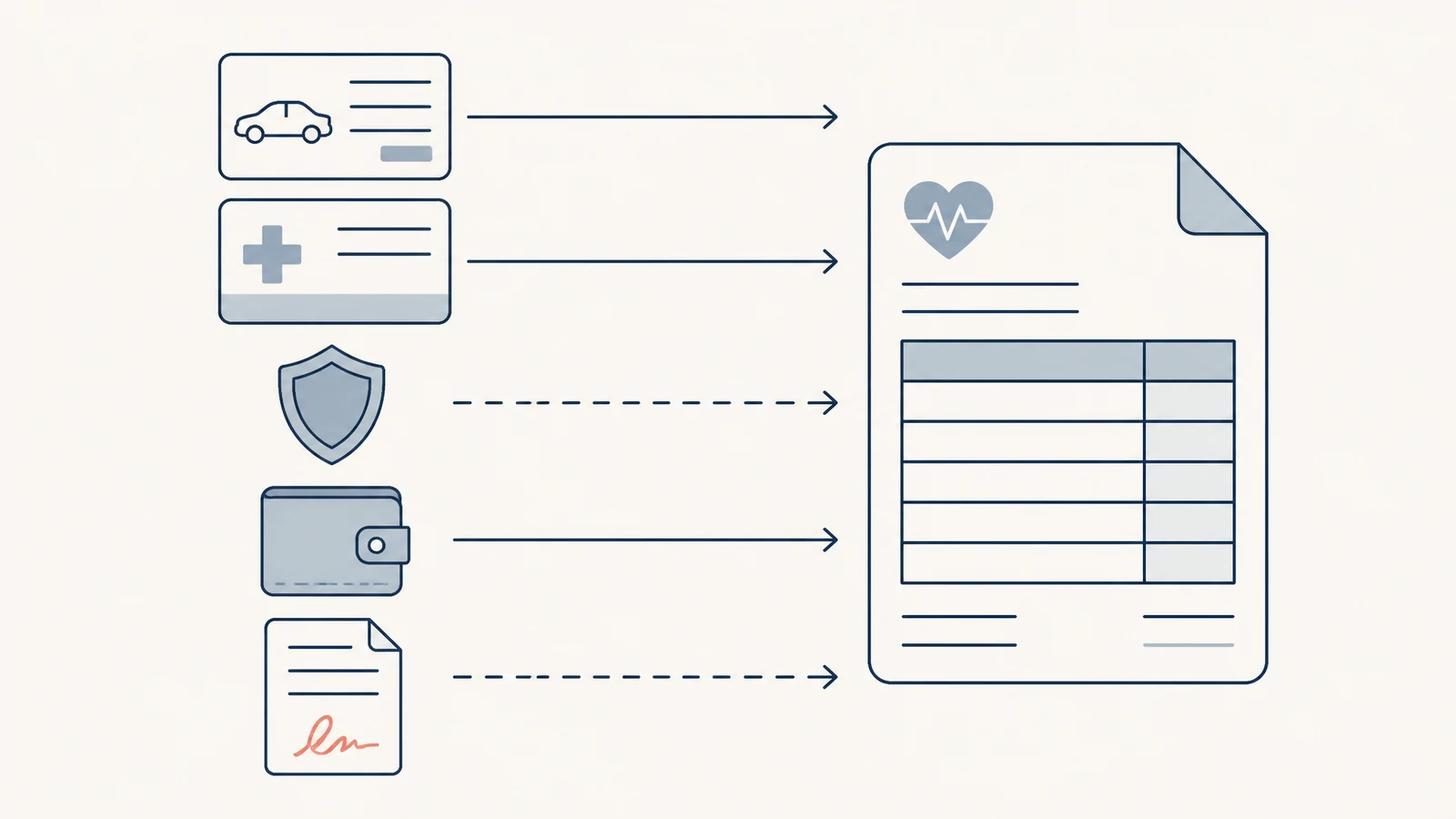
More than one payment path may be relevant after an Ohio crash.
After an Ohio crash, more than one payment path may be relevant. Which one applies depends on the actual policies and arrangements; the payment path should not dictate the diagnosis or care plan.
Ohio-Specific Reality Check
Four Ohio insurance facts that are easy to get wrong
Insurance language sounds universal until you read the actual Ohio rules. These four points are worth checking before you assume what coverage exists or what a report means.
1. Ohio requires financial responsibility, and the state publishes minimum liability amounts.
The Ohio BMV says the minimum required liability limits are $25,000 for injury or death of one person, $50,000 for injury or death of two or more people, and $25,000 for property damage in an accident. Those are minimum financial-responsibility amounts, not a promise that a particular bill, injury, or loss will be fully covered.
2. Uninsured and underinsured motorist coverage is not automatically required in every Ohio policy.
Ohio Revised Code 3937.18 says an Ohio motor-vehicle liability policy may include uninsured motorist coverage, underinsured motorist coverage, or both, but is not required to include them. That is why the declarations page and policy terms matter more than assuming every Ohio driver has the same protection.
3. Ohio has a specific process for reporting an allegedly uninsured driver to the BMV.
Ohio Revised Code 4509.06 allows a person involved in a motor-vehicle accident to forward a written report to the registrar within six months when alleging that a driver or vehicle owner was uninsured at the time of the accident. That special financial-responsibility report is not the same thing as the police crash report.
4. The online crash-report portal is useful, but the investigating agency is the official record keeper.
The Ohio Department of Public Safety crash-retrieval portal says reports on the portal are provided for statistical use and that the investigating agency is the official record keeper for the official report and supplemental information. Use the portal to locate information, then follow the agency's process when an official record is needed.
What Muskingum adds here is the decision layer: first identify what coverage actually exists, then separate the billing question from the medical question. A policy can affect how a bill is handled. It should not decide what diagnosis is made or what treatment is clinically appropriate.
Common ways accident-related medical care may be paid
The payment path can vary. Common possibilities include:
Medical Payments coverage (MedPay). Some auto policies include optional medical-payments coverage that may pay eligible medical expenses up to the policy limit, subject to the policy terms.
Health insurance. A health plan may cover eligible services subject to its network, deductible, copay, authorization, and other plan rules.
Liability insurance. If another driver may be legally responsible, liability coverage can become part of the claim, but the timing and amount of payment are not something a healthcare office can guarantee.
Self-pay. A patient may choose or need to pay the healthcare provider directly depending on the situation.
A letter of protection. For some qualifying injury matters, a written LOP arrangement may defer collection under its terms. It is not insurance and does not guarantee payment.
Which path applies depends on the actual policies and arrangements involved. Ask the insurer what coverage exists, ask the clinic what it plans to bill and what you may owe, and read any written payment agreement before relying on it. New to the terminology? See our accident and injury glossary.
We can work with information from different insurers
The clinic does not choose care based on the brand name on an insurance card. If insurance information is relevant to billing, bring it to the office so the practical billing questions can be reviewed. Medical decisions should remain based on the patient's symptoms, exam findings, and appropriate scope of care.
We are not an insurance company and do not determine fault, coverage, liability, settlement value, or legal rights. Confirm policy-specific questions with the insurer, and use an attorney for individualized legal advice when needed.
Photos or other information you already have about the collision
The insurance cards, policy information, and claim numbers you have been given
Any discharge papers, imaging reports, or medical records already in your possession
A list of the symptoms or functional changes you want to discuss with the clinician
Keep medical records for continuity and accuracy. They should reflect what you reported, what a clinician found, and what care was provided. They should not be written to inflate a claim or predict an insurance outcome.
FAQ
Frequently asked questions
Straight answers about care, scheduling, payment, and what to expect.
Who pays for chiropractic care after a car accident in Ohio?
There is no single answer. MedPay, health coverage, liability insurance, self-pay, or a letter of protection may apply depending on the policies and arrangements involved. Verify the specific payment path rather than assuming the other driver's insurer or your own insurer will automatically pay.
Do you work with my auto insurance company?
You can bring the insurance and claim information you have so the office can review billing questions. Coverage and payment still depend on the policy and claim. The clinic does not guarantee that an insurer will pay a particular charge.
What if I cannot pay upfront?
Call the office before assuming you have no options. Depending on the case, insurance benefits, self-pay arrangements, or an LOP may be relevant. Any deferred-payment arrangement should be confirmed before you rely on it.
Do I file a claim with my insurer or the other driver's?
That depends on the policies, facts, and type of claim. The healthcare office cannot give individualized claim or legal advice. Ask the insurer about its process and speak with an attorney if you need advice about legal rights or strategy.
This page is general information, not insurance or legal advice. We are not affiliated with any insurance company.
Need to understand the clinic's payment options before you schedule?
Call the office with the insurance information you have. We will explain what the clinic can verify and what still needs to be confirmed with the insurer.