Chiropractic Care

Chiropractic Care in Zanesville

Many of our patients come to us as a result of automobile accidents. Many others come for the everyday issues a chiropractor is trained to help with: neck pain from posture and stress, low back pain from work or sitting, headaches that build through the week, joint stiffness, and the slow accumulation of strain modern life puts on the spine. Whatever brought you in, the care is the same: a focused exam, a real plan built around what we find, and honest communication every step of the way.

Please do not submit any protected health information (PHI) in this form.

By submitting, you agree to be contacted about your appointment. We respect your privacy.

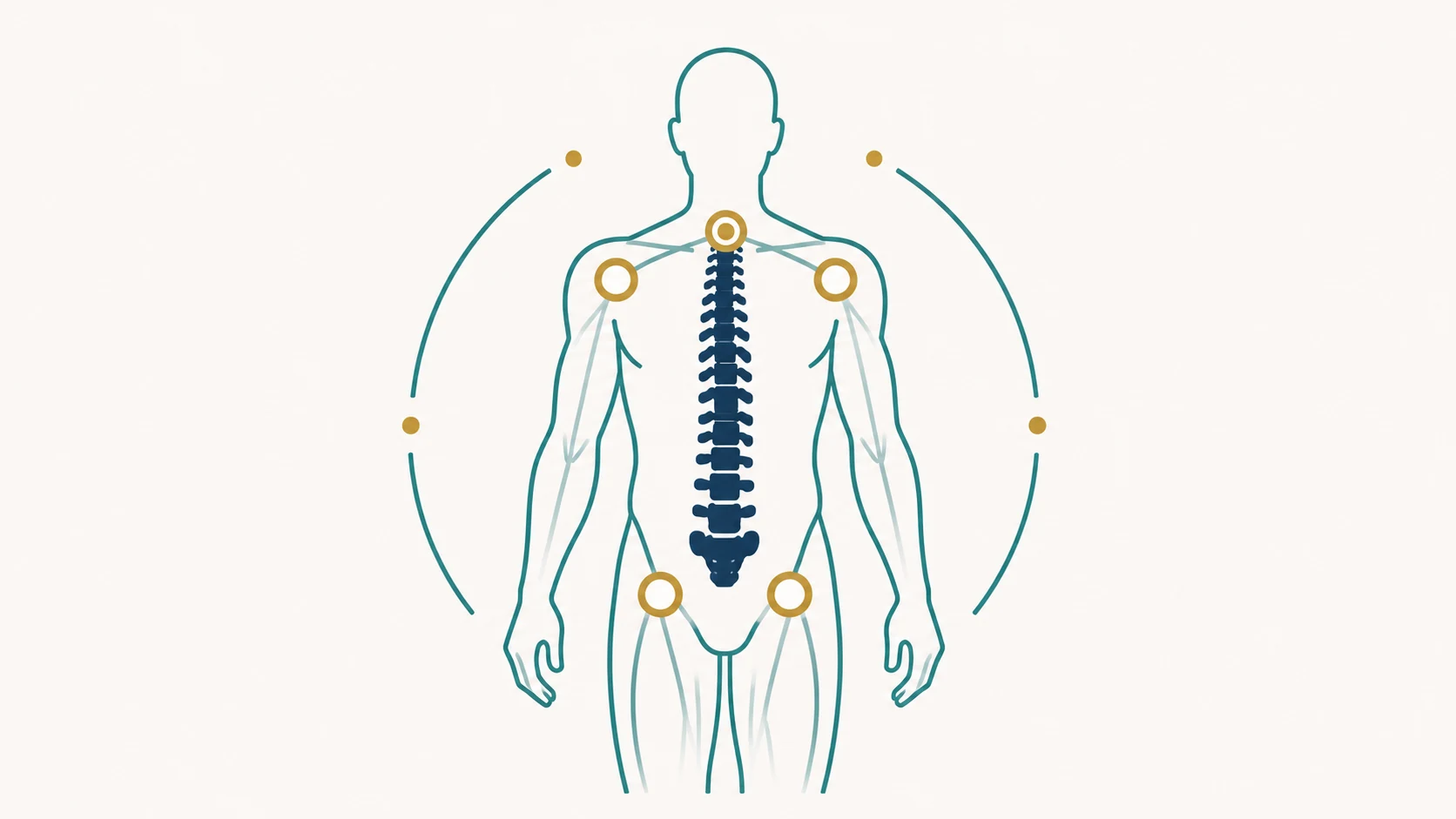
Illustration of a stylized human figure showing the spine and major joints highlighted to represent chiropractic care as a whole-system approach

Chiropractic care looks at the whole system, not just the spot that hurts.

A nagging shoulder can be a neck problem. A recurring back episode can be a hip problem. Finding the actual driver is what makes the relief last. Call (740) 453-2900.

What chiropractic care is, in plain terms

Chiropractors are doctors of chiropractic (DCs) who focus on the spine, joints, muscles, and the nervous system that connects them. The work is hands-on and conservative: identify what is moving poorly or causing pain, address it directly, and give your body the support it needs to recover.

Becoming a chiropractor takes a four-year doctoral program after a bachelor's degree, with thousands of supervised clinical hours and a national board licensing exam before practice. Within that scope, chiropractors examine, diagnose, and treat with adjustments, soft-tissue work, rehab exercises, and posture and ergonomic guidance. When something needs more than chiropractic can offer, the right move is a referral, and we make it. You can read a plain overview from the National Center for Complementary and Integrative Health on what chiropractic care is and what the research shows.

The honest version of when chiropractic helps: musculoskeletal pain, joint dysfunction, posture-driven problems, headaches that originate in the neck, and most common forms of back and neck pain. It is not a cure-all. It is a focused, conservative option that often resolves issues before more invasive care is needed, and a careful screen for the cases where something else is going on.

What we treat in our practice

  • Neck pain — From posture, prolonged sitting, stress, sleep position, or repetitive strain. We look at how the neck is moving and what is pulling on it, then treat the joints and soft tissue together so the relief actually holds.
  • Back pain — Low back from lifting, sitting, or chronic strain. Mid- and upper-back tension from desk work and posture. Many patterns that have been around for years respond to focused care once the actual driver is identified.
  • Headaches — Tension-type headaches and posture-related headaches that originate in the upper neck. When the headache pattern matches the neck findings, the right care usually helps.
  • Joint and posture care — Shoulder, wrist, hip, and knee discomfort. Ergonomic and lifestyle-related strain. The strain modern life puts on the body, from too much sitting, repetitive motion, or sudden overuse, shows up in predictable patterns we can address.
  • Auto accident and personal injury recovery — When neck pain, back pain, or other injuries follow a car accident, the care and the documentation take a focused approach. That side of the practice has its own pages, and if a crash is part of your story, start there.

Our approach

Every plan starts with a real exam, not a template. We listen to what is going on, look at how you move, and check the joints, muscles, and nerves involved. Then we tell you what we found in plain language, including what we do not think is the problem.

Care is built around what the exam finds, with clear goals and a clear endpoint. We document carefully because good records help your recovery, and they matter on the rare occasion a claim is ever involved. If something points beyond chiropractic scope, we refer you to a medical doctor or another provider. The goal is your outcome, not our visit count.

If you want to see the language we use across the practice, the accident and injury glossary covers the common terms in plain English.

Why see a chiropractor

Conservative care first. Many musculoskeletal issues respond to focused conservative treatment before more invasive options are needed. Starting with a careful, hands-on approach often resolves the problem and avoids steps you would rather not take.

Whole-system view. The spine, joints, and muscles work together; a chiropractor looks at the system, not just the symptom. A nagging shoulder is sometimes a neck problem; a recurring low-back episode is sometimes a hip problem. Finding the actual driver is what makes the relief stick.

Practical guidance. The work in the office is part of it; the posture, movement, and ergonomic adjustments at home and at work are the other part. Cleveland Clinic has a good overview of what a chiropractic adjustment is and what it does if you want a second source.

When to see a chiropractor

  • Persistent neck or back pain that does not improve with rest
  • Headaches that recur or worsen over time
  • Pain or stiffness from sitting, working, or driving long hours
  • Joint discomfort that limits everyday movement
  • Posture issues you want to address
  • Recurring injuries from work, sports, or activity
  • Recovery support after a car accident or injury
FAQ

Frequently Asked Questions

Common questions about chiropractic care and what to expect.

Do I need a referral to see a chiropractor in Ohio?

No. Chiropractors are primary-contact providers in Ohio, so you can schedule directly without a referral from a medical doctor. If your health plan or HSA has its own referral rules, those are separate from state law and you can check with your plan.

Does chiropractic care hurt?

Most patients describe adjustments as a quick release of pressure followed by relief, not pain. Sore areas can feel tender during soft-tissue work, and it is normal to feel mildly sore for a day after the first visit as the body adjusts. We match technique and force to what your exam shows.

How long does a typical appointment take?

Your first visit usually runs 45 to 60 minutes because of the exam, history, and treatment plan. Follow-up visits are shorter, typically 15 to 30 minutes depending on what is being done.

How many visits will I need?

It depends on what we find. Simple complaints can resolve in a handful of visits. More involved cases may run several weeks with a tapering schedule. Every plan has a clear goal and a clear endpoint, and we reassess at set intervals based on measurable progress.

Is chiropractic care safe?

Yes, when performed by a licensed chiropractor after a proper exam. Serious adverse events are rare, and we screen for any red flags before treatment. If something looks beyond chiropractic scope, we refer you to the right provider rather than treat through it.

Can a chiropractor help with headaches?

Often, yes, particularly for tension-type headaches and headaches that originate in the upper neck, called cervicogenic headaches. These respond well to a combination of gentle cervical work, soft-tissue therapy, and posture changes. Migraines are different and we will tell you if your pattern points elsewhere.

What if my issue is beyond what a chiropractor can treat?

We tell you straight and help you get to the right place. Part of a chiropractor's training is knowing when to refer to a medical doctor, physical therapist, or another provider. Your care, not our scope, is the point.

What should I expect at my first appointment?

A real conversation about what is going on, a focused exam of the area and the related joints and muscles, and a clear explanation of what we found. If treatment is appropriate that day, we typically start. You leave with a written plan and a clear next step.

Ready to talk through what is going on?

Get a focused exam and a real plan.