
Concussion & Post-Concussion

Concussion and Post-Concussion Care After a Car Accident

A car accident can cause a concussion even when your head never hits anything. The same rapid back-and-forth motion that injures your neck can move the brain inside the skull. Symptoms are often subtle at first, and some do not show up until days later, which is why getting screened early matters. Headaches aren't the only thing that can show up late. Read our full breakdown of delayed pain after a car accident.

Here is the part that makes this clinic different. We do not diagnose a concussion or a brain injury, and we do not ask you to take our word for what is going on inside your head. We screen your symptoms, document them carefully, and refer you to a physician for evaluation. If the physician diagnoses a concussion or a mild traumatic brain injury, we then provide supportive care within our scope as part of your care team. That chain protects you and keeps your care and your records clean.

Please do not submit any protected health information (PHI) in this form.

By submitting, you agree to be contacted about your appointment. We respect your privacy.

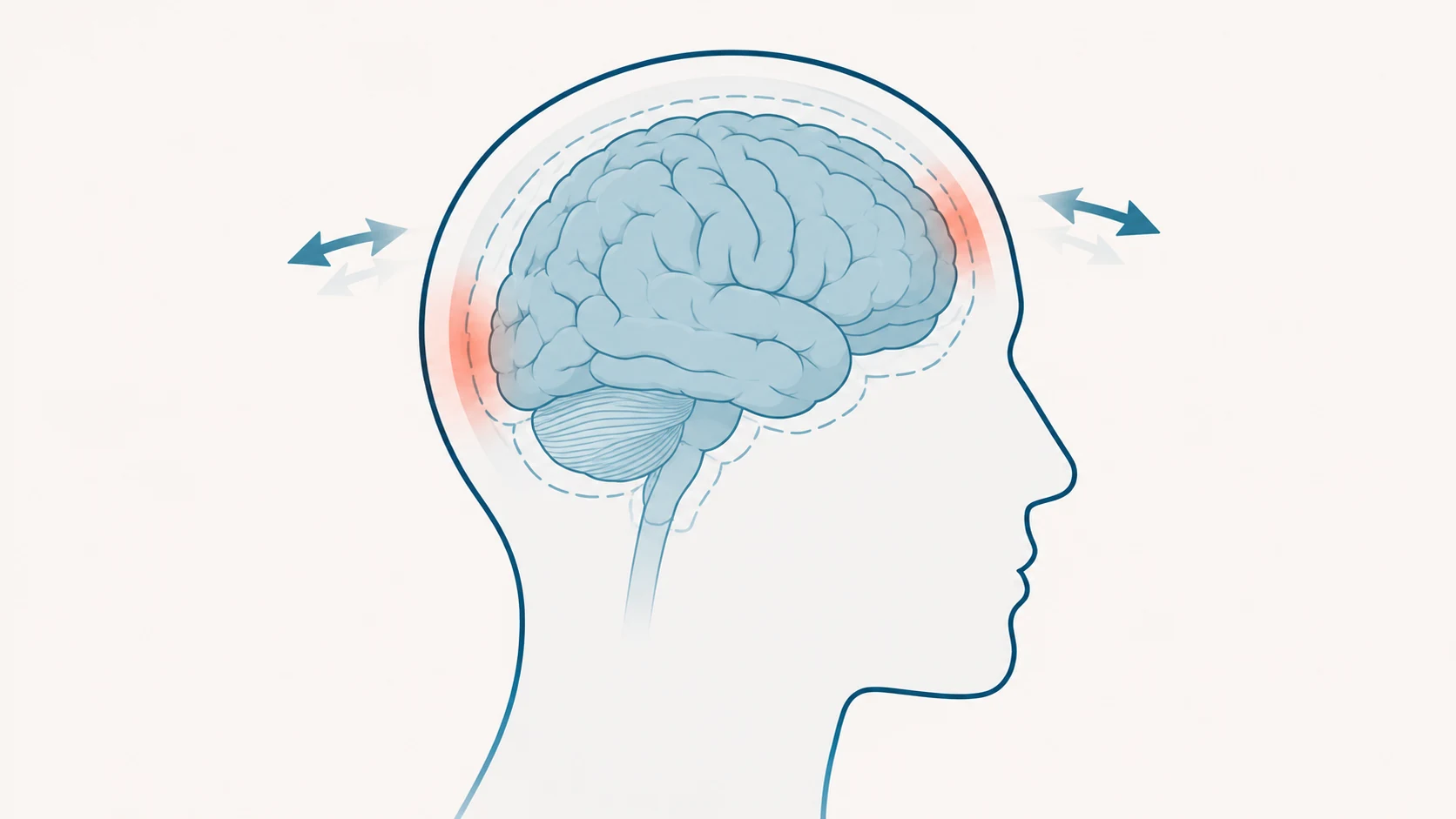
Illustration of the brain inside the skull showing concussion motion

You can have a concussion without ever hitting your head.

The same back-and-forth motion that strains your neck can move the brain inside the skull. We screen the symptoms, document them, and refer you to a physician for diagnosis. Request an appointment.

How concussion care works here

We screen.

Using the Rivermead Post-Concussion Symptoms Questionnaire, a published, validated symptom checklist, we record what you are experiencing and how strongly. This is a symptom screen, not a diagnosis.

We refer.

If your symptoms warrant it, we refer you to a physician for a medical evaluation and diagnosis.

We co-treat.

If the physician diagnoses a concussion or a mild traumatic brain injury, we provide supportive care within our scope, and we keep clear records throughout.

Symptoms we screen for

Concussion symptoms after a crash can show up right away or over the next few days. You can have them without ever losing consciousness. If you notice any of the CDC's concussion danger signs, including a headache that keeps getting worse or increasing confusion, that's an emergency room visit right away. For anything less urgent, get screened.

  • Headaches
  • Dizziness or balance trouble
  • Sensitivity to light or noise
  • Blurred vision
  • Nausea
  • Ringing in the ears
  • Trouble sleeping
  • Fatigue
  • Brain fog
  • Trouble concentrating or remembering
  • Irritability
  • Feeling more emotional or anxious than usual

About the Rivermead symptom screen

The Rivermead questionnaire is a widely used, validated tool for tracking concussion-related symptoms over time. We use it to capture your symptoms at your first visit and to follow how they change as you recover. It is important to be clear about what it is and is not. It is a structured way to measure and document symptoms. It is not a brain scan and it is not a diagnosis. The diagnosis is made by a licensed physician.

Why early evaluation matters

A concussion can feel mild at first and still deserve attention. Published research on post-concussion syndrome shows that for some people, symptoms persist for weeks or months, and that repeated or untreated head injuries can carry effects that surface later. We are not going to promise that early care prevents every long-term problem, because no honest clinic can promise that. What we can say is straightforward. Getting screened early, getting in front of a physician quickly, and keeping a clear record of your symptoms from the start gives you the best footing for recovery and the cleanest documentation if your symptoms continue.

Concussion and traumatic brain injury, in plain terms

A concussion is a form of mild traumatic brain injury. Traumatic brain injury covers a wide range of severity, from mild to severe. Because that range is so wide, a physician evaluation is the right way to understand what you are actually dealing with, rather than guessing from symptoms alone. Our role is to recognize the symptoms early, document them, and get you to the right physician fast.

This page is general information, not medical or legal advice. A diagnosis is made by a licensed physician.

Related reading: accident injury chiropractor in Zanesville, headaches after a car accident, neck pain after a car accident, when to choose the ER instead of a chiropractor, and the blog post Why your neck hurts more on day three. Post-concussion headaches often blend into the same patterns covered in our general headache care page, which is worth reading if your headaches have lingered past the acute window.

FAQ

Frequently Asked Questions

Quick answers about accident care, documentation, and what happens after you call.

Can a car accident cause a concussion even if I did not hit my head?

Yes. The rapid back-and-forth motion in a crash, the same motion that causes whiplash, can move the brain inside the skull. You can have a concussion without any direct blow to the head and without losing consciousness.

Is a concussion the same as a traumatic brain injury?

A concussion is a mild traumatic brain injury. Traumatic brain injury covers a range of severity from mild to severe. Because that range is wide, a physician evaluation is the right way to understand what you are dealing with.

Do you diagnose concussions or brain injuries?

No. We screen and document your symptoms and refer you to a physician for evaluation and diagnosis. If the physician diagnoses a concussion or a mild traumatic brain injury, we provide supportive care within our scope as part of your care team.

How soon should I be evaluated if I have these symptoms after a crash?

As soon as you can. Some concussion symptoms are subtle or delayed, so early screening and a prompt physician evaluation matter even if you felt fine at the scene.

Can concussion symptoms show up days or even longer after the accident?

Yes. Symptoms can appear or get worse in the days after a crash, and some people develop post-concussion symptoms that linger. That is why we screen early and track your symptoms over time.

What is the Rivermead questionnaire?

It is a published, validated, self-reported questionnaire used to track concussion-related symptoms and how they change over time. It is a symptom screen, not a diagnostic test.

What happens if my symptoms point to something more serious?

If your symptoms suggest something beyond our scope, we refer you promptly to the appropriate medical provider. Screening and referring quickly is part of how we keep your care safe.

Related injuries we treat: headaches after a car accident and neck pain. We see accident patients from Zanesville, Cambridge, Frazeysburg, and Norwich. Same-day appointments and walk-ins welcome.

New to these terms? See our personal injury glossary.

Were you hurt in a car accident?

Get evaluated quickly. Get clear documentation. Start treatment today.