
Chest & Rib Pain

Chest and rib pain after a car accident

Important — Possible Emergency

Chest pain after a crash can be a medical emergency. If you have trouble breathing, severe or crushing chest pain, pain spreading to your arm, jaw, or back, a racing or irregular heartbeat, coughing up blood, dizziness, or fainting, call 911 or go to the nearest emergency room now. Do not wait, and do not use this page to decide whether your symptoms are serious.

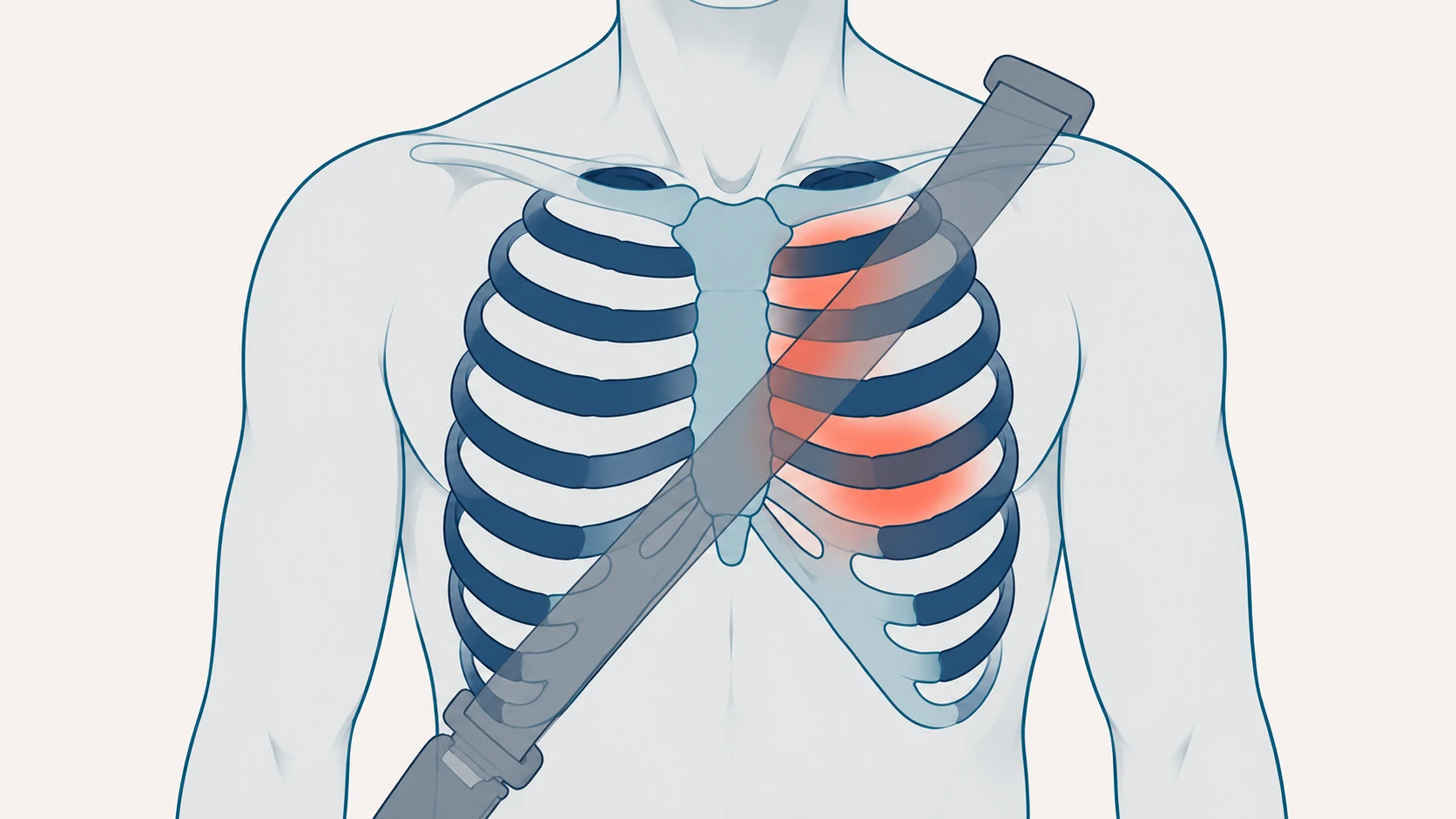
Chest and rib pain is common after a car accident, often from the seatbelt, the steering wheel, or the force of the impact against your chest. Most of the time it comes from the chest wall, the ribs, or the muscles around them. But because the chest holds your heart and lungs, chest pain after a crash always has to be taken seriously and evaluated by a physician first. This page explains when it is an emergency, what can cause it, and how careful accident care fits in once the serious possibilities have been ruled out.

By submitting, you agree to be contacted about your appointment. We respect your privacy.

When chest pain after a crash is an emergency

Go to the emergency room or call 911 if you have any of these after a crash:

  • Trouble breathing or shortness of breath
  • Severe, crushing, or worsening chest pain
  • Pain that spreads to your arm, jaw, neck, or back
  • A racing, pounding, or irregular heartbeat
  • Coughing up blood
  • Dizziness, lightheadedness, or fainting
  • Cold sweat, nausea, or bluish lips or skin
  • A chest that feels unstable, or a visible deformity

These can be signs of an injury to the heart, lungs, or another internal structure, and they need emergency care immediately. A chiropractic office is not the place to evaluate these, and neither is a website.

What causes chest and rib pain after a car accident

Chest pain after a crash falls into two very different groups, and telling them apart is a physician's job, not something to guess at.

Serious causes that need a physician or emergency care

The force of a collision can injure the heart, the lungs, or other internal organs, or cause internal bleeding. It can crack ribs in ways that affect breathing. These are medical emergencies, they are diagnosed by a physician with imaging and testing, and they are not treated at a chiropractic office.

Musculoskeletal causes, once serious injury is ruled out

After a physician has cleared the dangerous possibilities, a lot of lingering chest and rib pain comes from the chest wall and the structures around it: bruised or strained chest-wall muscles from the seatbelt, irritation where the ribs meet the breastbone, and injuries involving the ribs and the mid-back, since the ribs connect to the spine. This is the kind of musculoskeletal pain that can be part of accident recovery care.

How we fit in

Our role here is careful and limited, on purpose.

First, we screen and refer. If you come in with chest pain, or it shows up during care, and anything suggests it could be more than a chest-wall injury, we send you to a physician or to emergency care. We do not diagnose or treat injuries to the heart, lungs, or other internal structures. Those are outside chiropractic scope and require a medical doctor.

Once a physician has ruled out anything serious, we can help with the musculoskeletal part. Chest-wall and mid-back (thoracic) injuries from a crash can be part of the accident recovery care we provide, and we coordinate with your physician so your care stays organized and on the same page. We also document these injuries carefully, the same way we document the rest of an accident injury, so your medical record reflects what happened.

Why early evaluation and documentation matter

Two things are true at once after a crash. Chest pain has to be checked promptly because some causes are dangerous, and the musculoskeletal aftereffects are easier to address when they are caught and documented early. Getting evaluated quickly protects your health first and your record second. If you want to understand how careful records support recovery and a claim, read the injury records that help your case.

For related injuries from the same kind of impact, see our pages on shoulder injuries and back pain, or browse all the accident injuries we treat. New to the terms? See our accident and injury glossary.

FAQ

Frequently asked questions

Quick answers about accident care, documentation, and what happens after you call.

Is chest pain after a car accident serious?

It can be. The chest holds the heart and lungs, so chest pain after a crash always needs prompt evaluation by a physician. If you have trouble breathing, severe pain, pain spreading to your arm or jaw, a racing heartbeat, or you feel faint, call 911 or go to the emergency room right away.

Why does my chest hurt after a crash if nothing is broken?

Once a physician has ruled out anything serious, a lot of chest pain after a crash comes from the chest wall, the seatbelt, the muscles around the ribs, or where the ribs connect to the mid-back. That kind of musculoskeletal pain is common even when imaging shows no fracture.

Should I see a chiropractor or a doctor for chest pain after an accident?

A physician or the emergency room first, always, because chest pain can signal a serious injury that has to be ruled out. After that, the musculoskeletal chest-wall and mid-back part of the pain can be part of accident recovery care, coordinated with your physician.

How long does chest and rib pain last after a car accident?

It varies with the injury and is something a provider should track. Chest-wall and rib soreness can take weeks to settle, and it should be re-evaluated as you heal rather than assumed to resolve on its own.

Related injuries we treat: shoulder injuries and back pain. We see accident patients from Zanesville, Dresden, New Concord, and South Zanesville. Same-day appointments and walk-ins welcome.

Hurt in a crash near Zanesville? Once you have been medically evaluated, call (740) 453-2900 or request an appointment to talk about the musculoskeletal side of your recovery.

This page is general information, not medical or legal advice. If you think your symptoms may be an emergency, call 911 or go to the nearest emergency room.

Were you hurt in a car accident?

Get evaluated quickly. Get clear documentation. Start treatment today.