Chiropractic Care

Neck Pain Care in Zanesville

Most neck pain has nothing to do with a single dramatic event. It builds. A few weeks of long hours at the desk. A new sleeping position that did not quite work. A stress pattern that lives in the shoulders. Whatever set it off, the result is the same: stiffness, headaches, the slow loss of motion that makes turning your head feel like work. We see this every day, and most of it responds to focused conservative care.

Please do not submit any protected health information (PHI) in this form.

By submitting, you agree to be contacted about your appointment. We respect your privacy.

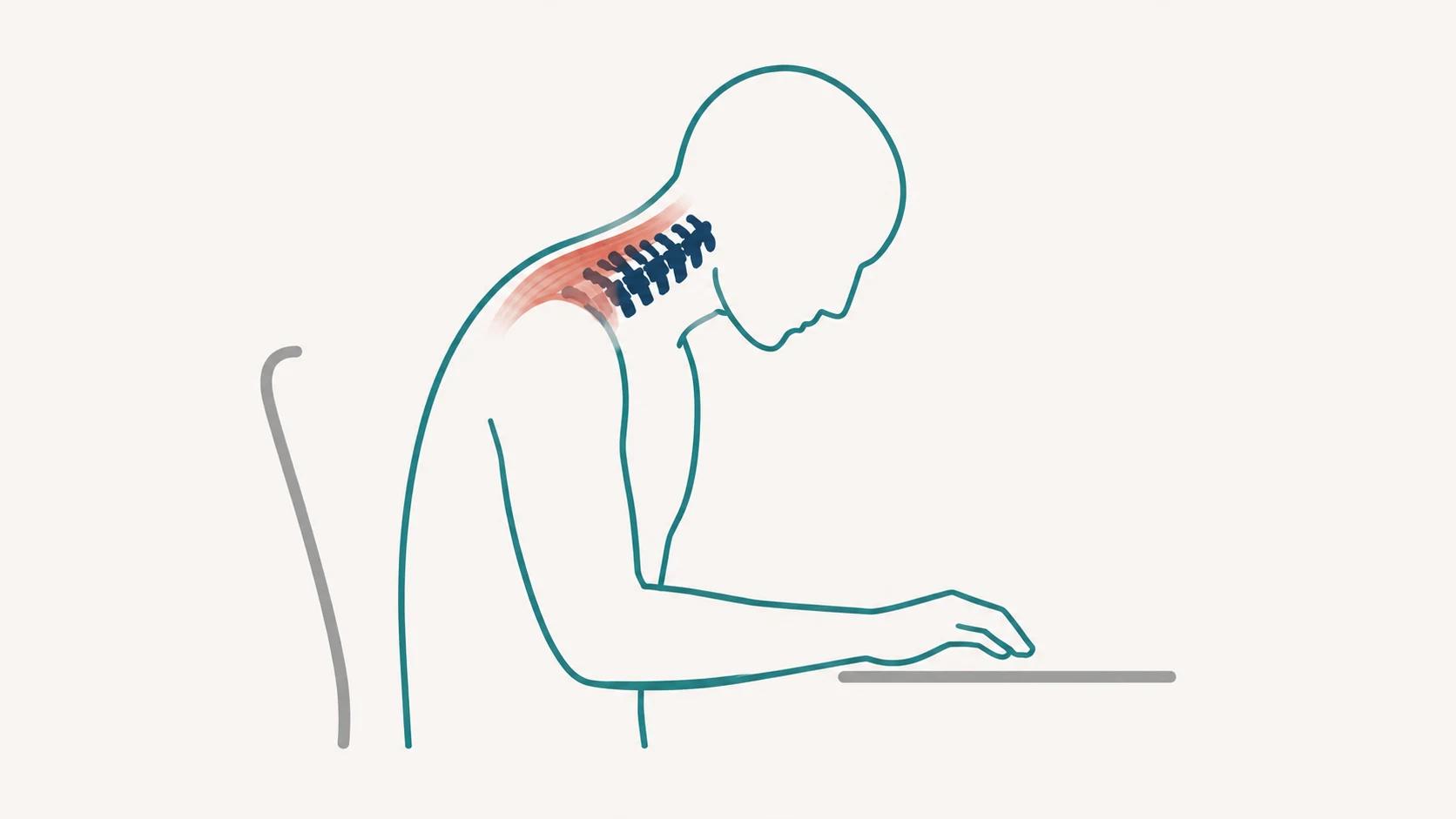
Illustration of a stylized human figure seated at a desk in a forward-hunched posture with strain at the back of the neck and upper shoulders

Most neck pain is the slow result of forward-head posture, not one bad moment.

Hours at the desk, hours on the phone, hours at the wheel. The upper trapezius and suboccipital muscles hold the strain until the neck announces it. Treating the pattern, not just the pain, is what makes it stop coming back. Request an appointment.

Where everyday neck pain comes from

Posture is the usual suspect. Prolonged sitting, a forward head position pulled toward a screen, long drives, and the slow forward creep that comes with desk work all load the neck in ways it was not built for. The muscles at the base of the skull and across the upper shoulders end up doing the work the deeper neck stabilizers should be doing, and they get tired and sore.

Sleep is the next one. A pillow that is too tall, too flat, or just wrong for how you sleep can leave you waking up "wrong" — stiff on one side, headachy, unable to turn your head. Stress lives in the upper trapezius and the suboccipital muscles, and a hard week shows up as a tight neck and a headache that builds through the afternoon. Repetitive strain from looking down at phones, overhead reaching, or the same lift over and over adds its share.

The pattern is usually the slow build: small daily strains stacking up over months until the neck "suddenly" hurts. Sometimes, though, neck pain has a more specific cause that needs evaluation — a disc, a nerve, an inflammatory issue — and that is exactly why a real exam matters before assuming it is just posture.

What chiropractic care does for neck pain

The exam comes first. We look at range of motion, how the individual joints in the neck are moving, muscle tone across the neck and shoulders, and the related areas that often drive a neck pattern — the mid-back, the shoulders, even the head and jaw. The goal is to find the actual driver, not just the spot that hurts.

Treatment is matched to what we find. That usually means gentle joint mobilization or an adjustment where it is appropriate, focused soft-tissue work for the upper traps and suboccipitals, and targeted stretches and strengthening to support the change. Nothing is done for its own sake; every piece has a reason tied to the exam.

Posture and ergonomic guidance is the other half of the work. The desk setup, the phone habit, the sleep position — what you do the other 23 hours a day is what makes the office work hold. Cleveland Clinic has a useful overview of neck pain causes and self-care if you want a second source while you read. For the broader picture of how we work, the chiropractic care page covers our approach across conditions.

When neck pain needs more than chiropractic care

These signs do not mean something is necessarily wrong, but they mean a careful evaluation is needed before chiropractic treatment, and sometimes a medical doctor needs to be in the loop. We screen for all of these before starting care.

  • Numbness, tingling, or weakness in an arm or hand
  • Pain that radiates down the arm with neurological signs
  • Severe headache with neck stiffness and fever
  • Pain after a fall or significant impact
  • Loss of bladder or bowel control
  • Pain that wakes you from sleep and will not settle

When neck pain follows a car accident

Neck pain that starts within a few days of a crash is a different situation. The injury pattern is different, the documentation matters, and the timing of care affects both the recovery and any insurance or attorney coordination that follows.

If your neck pain followed a car accident, see our dedicated page on neck pain after a car accident for the focused approach those cases need.

What to do in the meantime

  • Ice for 15 minutes a few times a day for the first 48 hours of an acute flare-up
  • After the first couple of days, gentle heat to relax tight muscles
  • Avoid the position that triggered it — stop the prolonged sitting, change the pillow
  • Gentle range-of-motion movement within your comfort range, not aggressive stretching
  • If you cannot turn your head, cannot sleep, or it is getting worse not better, get evaluated
  • Avoid cracking your own neck or having someone else do it

If the neck pain comes with a headache pattern, our notes on headaches cover the overlap, and back pain often shows up alongside neck issues when posture is the driver.

FAQ

Frequently Asked Questions

Common questions about neck pain and chiropractic care.

How long does it usually take for neck pain to resolve?

It depends on what is driving it. A recent flare from a bad sleep position or a heavy week at the desk often eases within one to three weeks of focused care. Patterns that have been around for months can take longer, sometimes six to eight weeks, because the posture and movement habits behind them need to change alongside the treatment. We give you a clear timeline at the first visit based on what the exam shows.

Can I prevent neck pain from coming back?

Often, yes. Most everyday neck pain is driven by the same handful of habits: desk setup, screen position, phone use, sleep position, and stress. Once we identify the ones that matter for you, small adjustments at home and at work do most of the prevention work. We send you out with specific changes, not a generic handout.

Should I use ice or heat for neck pain?

Ice for the first 48 hours of a sharp flare-up; it calms the inflammation and numbs the area. After that, gentle heat usually helps more because it relaxes the tight muscles that are holding the joint stiff. Fifteen minutes at a time is plenty, and listen to the neck — if either one makes it worse, stop.

Is it normal for neck pain to cause headaches?

Yes. The upper neck and the base of the skull share nerves with the head, so tight muscles and stiff joints in that region commonly refer pain into the temples, behind the eyes, or up the back of the head. These are called cervicogenic headaches, and they typically respond well to addressing the neck itself.

Why does my neck hurt more on some days than others?

Sleep position, stress level, hours at the desk, and what you did the day before all change the load on the neck. A bad pillow night or a long drive can flare a neck that was otherwise calm. The pattern usually makes sense once you map it to the day-to-day inputs, which is part of what we walk through at the first visit.

When is neck pain serious enough to see someone?

If it has lasted more than a week without improving, if it is getting worse, if it wakes you from sleep, or if you have numbness, tingling, or weakness in an arm or hand, get it evaluated. Severe headache with neck stiffness and fever, pain after a fall, or loss of bladder or bowel control are emergency signs and need medical evaluation right away.

Tired of working around the pain? Get a focused exam and a real plan.

Same-day appointments available.