

Headaches After a Car Accident: When to Get Medical Help
Published
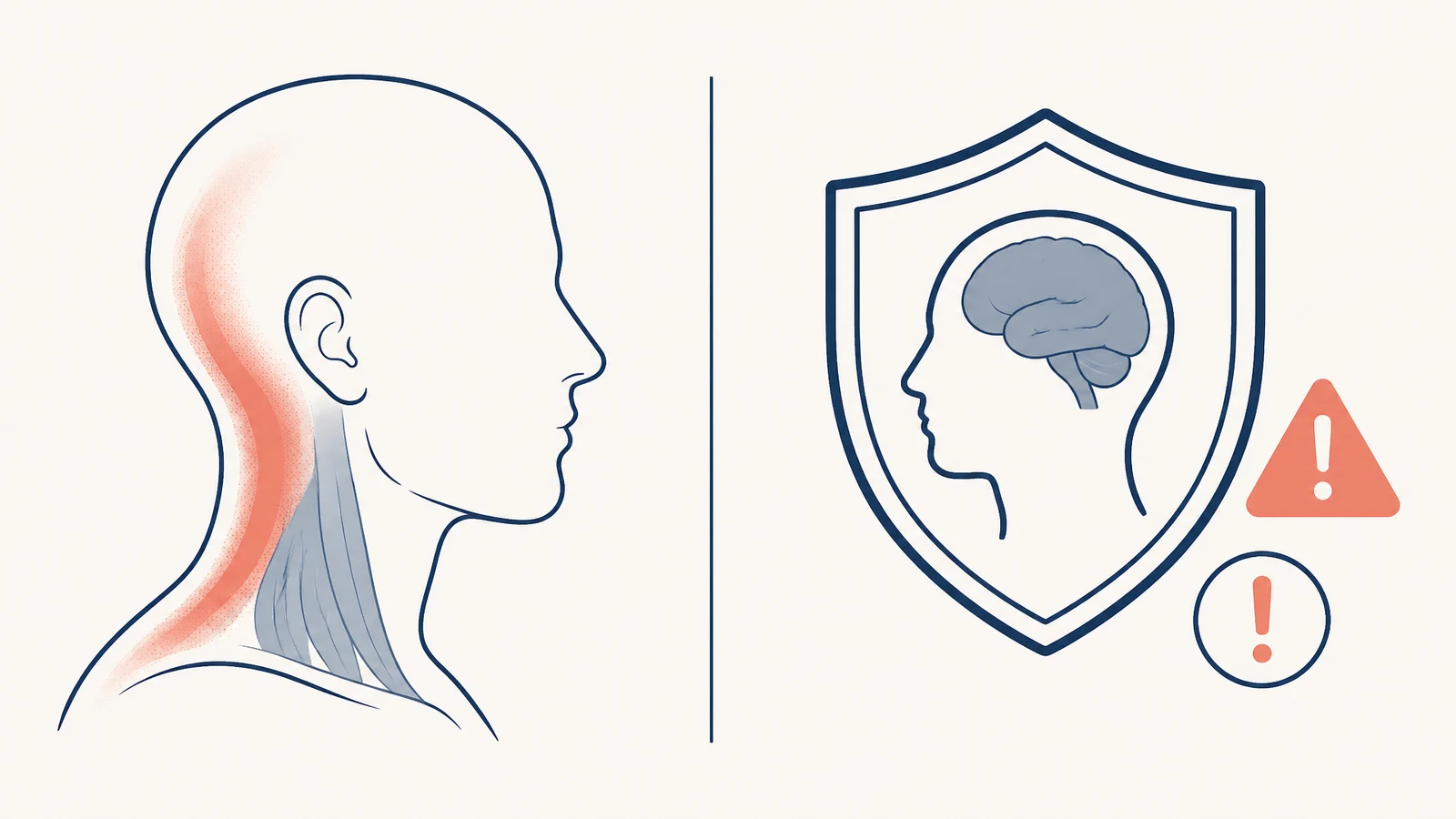
A post-crash headache pattern can have more than one explanation.
A new headache after a collision deserves context. Some headache patterns may involve the neck and surrounding muscles, while others can be related to concussion, migraine, medication, stress, or a more serious medical problem. The safest approach is not to label every headache as whiplash or concussion from the symptom alone. Start with the warning signs and the details of the headache itself.
Know the concussion danger signs
After a possible head injury, a worsening headache, repeated vomiting, seizure, increasing confusion, slurred speech, new weakness or numbness, unequal pupils, or difficulty waking requires emergency medical evaluation. The CDC publishes these and other concussion danger signs.
A headache can also involve the neck
Some headaches are associated with musculoskeletal findings in the upper neck and surrounding tissues. Neck pain, stiffness, painful movement, or pain beginning near the base of the skull can be useful clinical details. That possibility should be considered only after the history and relevant warning signs are reviewed, because headaches have many causes outside chiropractic care.
Use a two-lane framework: safety first, pattern second
A useful way to think about a post-crash headache is to separate two decisions that are often mixed together. The first lane is safety: are there head-injury danger signs or other features that need emergency or medical evaluation? The second lane is pattern: once urgent concerns are addressed, are there neck, movement, muscle, migraine-like, medication-related, or other features that help the clinician investigate the headache?
The order matters. A neck-related possibility should not be used to explain away a new neurological warning sign. At the same time, the fact that a headache followed a crash does not automatically establish concussion. The history, associated symptoms, examination, and appropriate medical assessment determine which lane needs attention.
Compare the headache with your own baseline
For someone who had headaches before the collision, the most useful question may be what is different now. Is the location different? Is the intensity or frequency different? Does it now occur with neck movement, dizziness, nausea, vision changes, balance trouble, numbness, weakness, or unusual fatigue? Is it interfering with driving, screen use, work, sleep, or concentration in a new way?
That comparison gives the clinician more information than simply saying the headache is "from the accident." It also avoids the opposite mistake of dismissing a new pattern because a person had headaches in the past.
The next step depends on the pattern, not the label
If emergency warning signs are present, the next step is emergency care. If the person is medically stable and the headache pattern appears to involve non-emergency neck-related musculoskeletal findings, conservative care may be one part of the plan. If the pattern is changing, unexplained, persistent, or outside chiropractic scope, reassessment and medical referral are appropriate. The label should follow the evidence, not come before it.
What to tell the clinician
- When the headache began and whether it is getting better, worse, or changing
- Where the pain is located and what it feels like
- Any loss of consciousness, memory gap, vomiting, dizziness, or balance problem
- Light or sound sensitivity, vision changes, weakness, or numbness
- Associated neck pain, stiffness, or painful movement
- Whether this headache is different from headaches you have had before
Chiropractic care should stay within musculoskeletal scope
A chiropractor may evaluate and treat appropriate neck-related musculoskeletal findings associated with some headache patterns. That does not replace medical evaluation for concussion, a serious head injury, or headache features outside chiropractic scope. If the pattern changes or does not improve as expected, reassessment and referral may be appropriate.
There is no responsible fixed headache timeline
The cause and individual situation determine what recovery looks like. A headache that persists, worsens, changes character, or is accompanied by new neurological or other concerning symptoms should be reassessed rather than managed by a generic timeline.